AI-Driven QA Automation for Agentic and Modern Applications
Replace brittle script-first automation with adaptive AI agents that test web, API, mobile, desktop, and AI-powered applications using intent, context, and real user behavior.
Reduce flaky tests caused by UI and DOM changes
Eliminate constant script maintenance
Test AI agents, workflows, and modern applications
No-code + low-code flexibility for QA teams
Trusted by engineering teams building modern AI-native software.
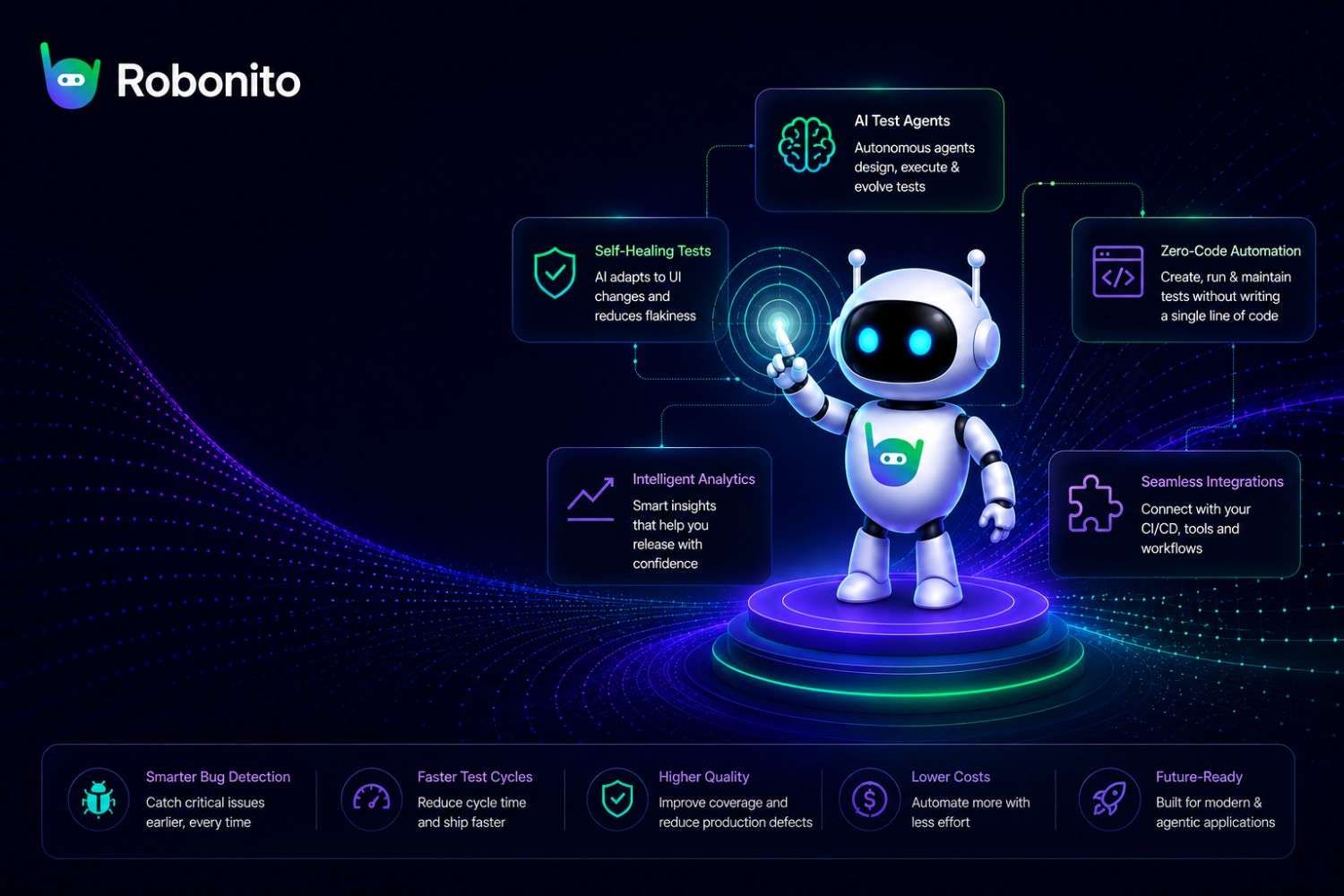
Trusted by Teams Scaling Modern Software Faster







How Agentic AI Improves Automation Testing
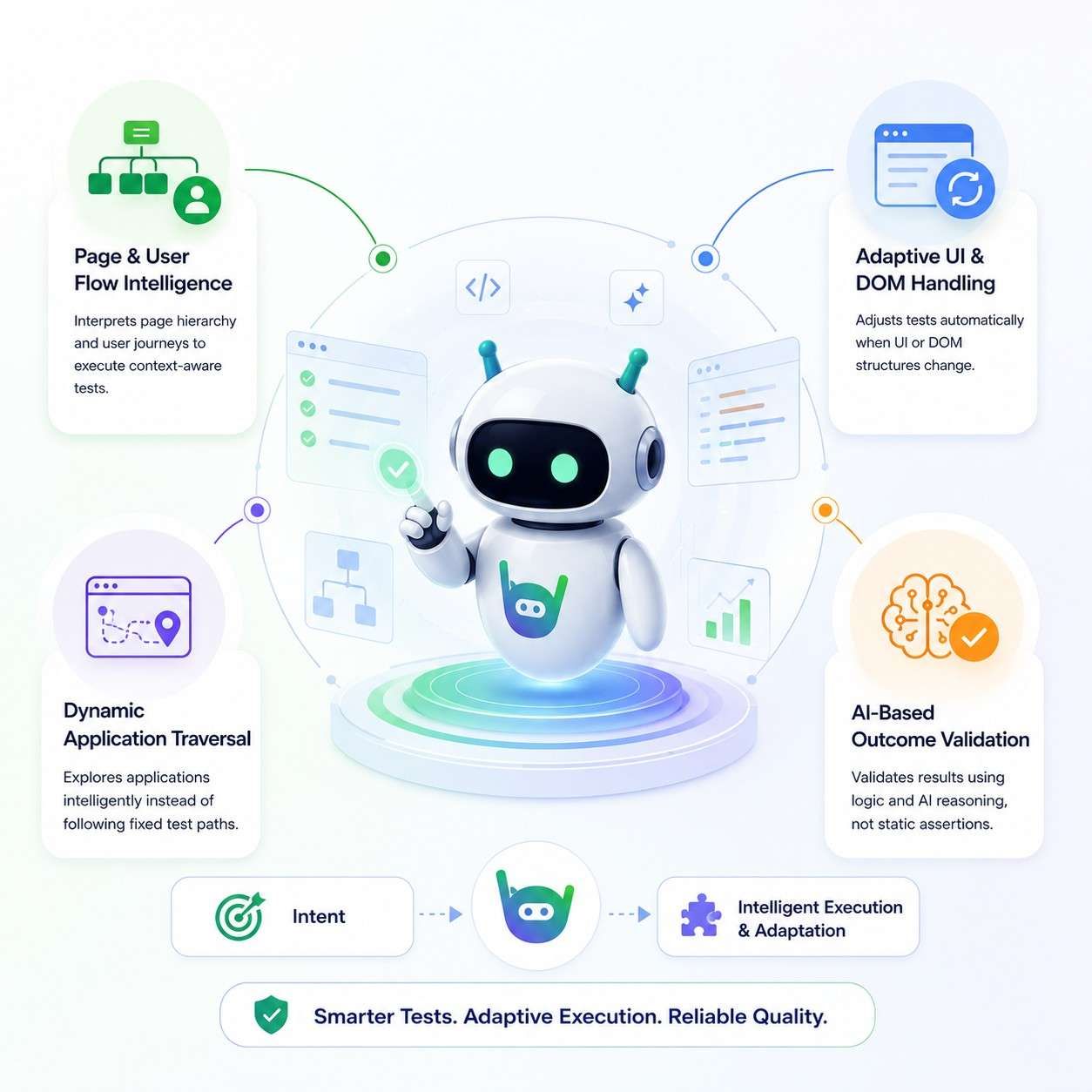
Robonito uses agentic AI to execute tests based on intent, context, and behavior rather than fixed scripts. Instead of following a rigid path, AI agents reason about the application during execution and adapt when conditions change.
- Understands page structure and user flows
- Traverses applications dynamically
- Adapts to UI and DOM changes automatically
- Validates outcomes using logic + AI reasoning
Page & User Flow Intelligence
Interprets page hierarchy and user journeys to execute context-aware tests.
Dynamic Application Traversal
Explores applications intelligently instead of following fixed test paths.
Adaptive UI & DOM Handling
Adjusts tests automatically when UI or DOM structures change.
AI-Based Outcome Validation
Validates results using logic and AI reasoning, not static assertions.
Reduce Flaky Tests with Context-Aware Execution
Flaky tests usually come from timing issues, dynamic DOMs, or minor UI behavior changes. Benefits for QA engineers:
- Intelligent Execution
- Stable Validation
Robonito’s agentic execution model handles these variations intelligently, reducing false failures and increasing confidence in automation results.
Fewer false negatives
Reduce failures caused by timing issues and dynamic UI changes.
Reliable CI feedback
Stable test results you can trust in every pipeline run.
Less reruns
Spend less time rerunning tests and debugging noise.
Higher confidence
Ship with confidence backed by resilient automation.

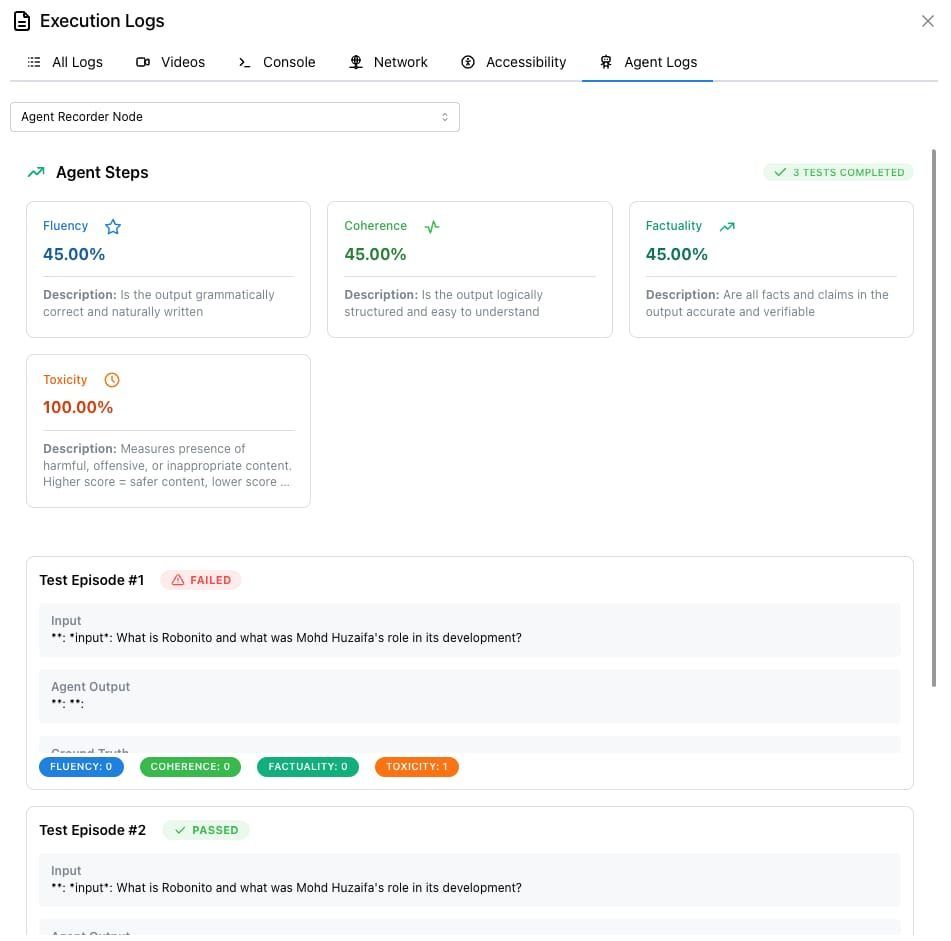
No-Code Automation Without Losing Control
No-code automation shouldn’t mean limited capability. Robonito allows QA engineers to automate common flows visually while retaining the ability to handle complex scenarios when needed.
How engineers stay in control:
- No-code flows for standard scenarios
- Low-code extensions for edge cases
- API-level assertions and validations
- Reusable, data-driven components
Robonito is built for the future of software, not just the past.
A Practical Alternative to Selenium and Playwright
Robonito doesn’t force QA engineers to abandon everything they know. It complements modern automation practices while removing the most painful parts of script maintenance.

Less reliance on fragile selectors
Tests adapt to UI changes without breaking on minor DOM updates

Faster test creation and updates
Create and modify tests quickly with minimal manual effort.

Lower long-term maintenance cost
Spend less time fixing broken tests as applications evolve.

Better stability for dynamic applications
Reliable automation even for frequently changing, data-driven UIs.
Reduce QA Maintenance While Increasing Release Confidence
Robonito fits naturally into modern engineering workflows without forcing pipeline changes or lock-in. Pipeline-friendly features:
CI/CD compatible execution
CI/CD-ready execution that fits seamlessly into existing pipelines.
Parallel runs for faster feedback
Run tests concurrently for faster feedback and shorter release cycles.
Web and API automation support
End-to-end automation for web and API testing from a single platform.
Works alongside existing tools
Works alongside your current tools without forcing migration or lock-in.
Built by Engineers Who’ve Maintained Broken Test Suites
Robonito is built by engineers who have spent years maintaining Selenium and Playwright test suites in real-world systems. We’ve dealt with flaky pipelines, brittle selectors, and automation that “worked yesterday.” That experience shaped Robonito’s design philosophy:
Automation should adapt to applications, not the other way around
Engineers should focus on testing behavior, not babysitting scripts
AI should assist execution, not hide failures
Robonito exists because script-first automation doesn’t scale
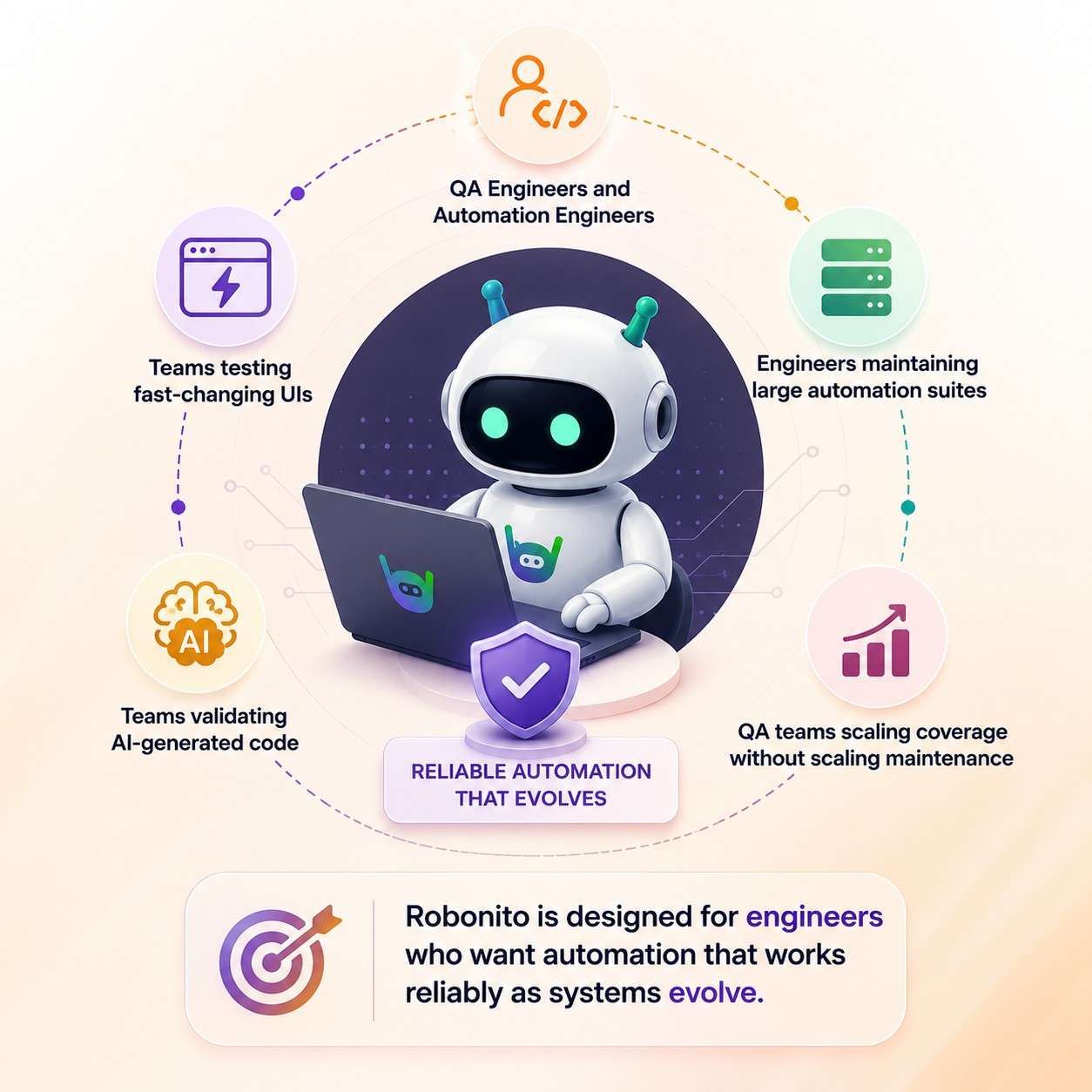
Built for Hands-On QA Engineers
Ideal For:
Robonito is designed for engineers who want automation that works reliably as systems evolve.
Traditional Automation Was Built for Static Applications. Modern Software Isn’t Static.
Traditional Automation
The shift:
- Static scripts
- Manual maintenance
- Selector dependency
- Fragile CI pipelines
- High flaky test rates
Robonito
The shift:
- Agentic execution
- Context-aware automation
- Self-adaptive testing
- Resilient pipelines
- AI-assisted validation
See Agentic AI Automation Testing in Action
See how agentic AI executes adaptive automation tests based on intent, context, and real-time application behavior.
Questions & Answers
Frequently Asked Questions
Any questions? Reach outWhat makes Robonito different from traditional automation testing tools?
Unlike script-based automation testing tools, Robonito uses agentic AI to execute tests based on intent, context, and application behavior. This reduces flaky tests and eliminates constant script maintenance caused by UI and DOM changes.
Is Robonito a good alternative to Selenium or Playwright?
Yes. Robonito is a practical Selenium and Playwright alternative for teams struggling with brittle selectors and flaky pipelines. It complements modern automation practices while significantly lowering long-term maintenance overhead.
How does agentic AI reduce flaky tests in automation?
Agentic AI understands page structure, user flows, and runtime context. Instead of failing on minor UI or timing changes, Robonito adapts during execution and validates outcomes using logic and AI reasoning.
Can QA engineers use Robonito without writing code?
Robonito supports no-code automation for standard flows and low-code extensions for complex scenarios. This allows QA engineers to stay in control while reducing dependency on heavy scripting.
Does Robonito fit into existing CI/CD pipelines?
Yes. Robonito is CI/CD compatible and supports parallel execution, web and API testing, and integration with existing workflows without requiring major pipeline changes.