Credentials and environments
Automated tests log in, call APIs and reach staging systems. Who can use those credentials, and where, has to be controlled.
Security & Compliance
Your tests touch credentials, test data and production-like systems. Robonito keeps that work governed, logged and audit-ready, and runs in the cloud, in a private cloud, on-premise or hybrid.

SOC 2 Type II audited
Controls tested by an independent auditor over an observation period. Report shared under NDA.
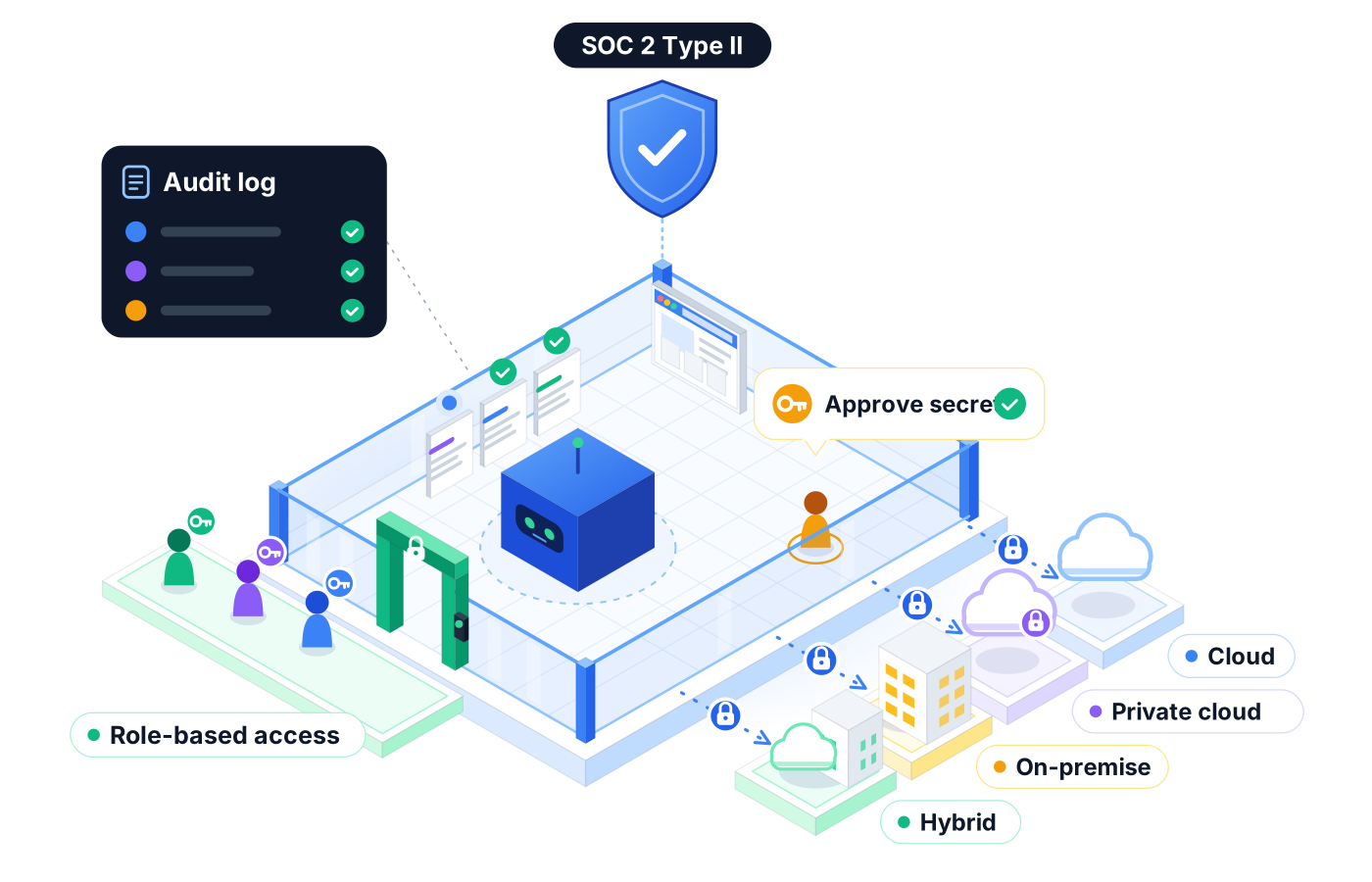
SOC 2 Type II
Independently audited controls
Encrypted in transit
Between you and the platform
Role-based access
Least privilege by default
4 deployment models
Cloud, private, on-prem, hybrid
01Why it matters
A testing platform holds the keys to your environments. Without strong controls, automation becomes an unmonitored path into your systems and a gap in your compliance story.
Automated tests log in, call APIs and reach staging systems. Who can use those credentials, and where, has to be controlled.
Test runs often touch production-like records. That data needs the same protection and access rules as the systems it came from.
AI agents that act without boundaries become an attack surface. Every automated action should run inside a scope a person defined.
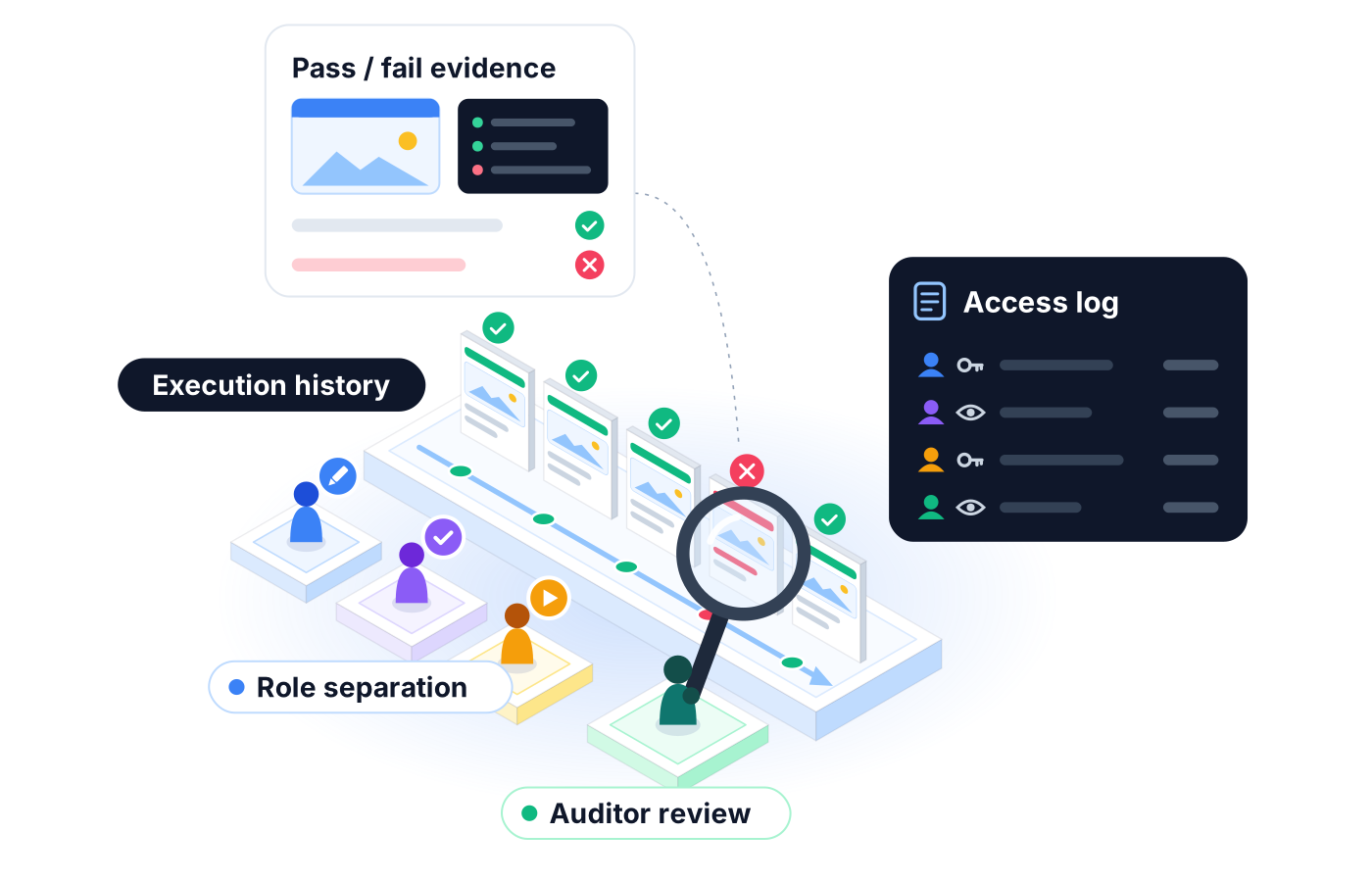
When an auditor asks what was tested, by whom and with what result, the answer should be a log, not a reconstruction.
02SOC 2 Type II
A SOC 2 Type II report shows that an independent auditor tested our controls and found them operating over an observation period. For your team, that means less vendor risk and a faster security review.
What the audit covers
01
How the platform is run, maintained and protected day to day.
02
Who can reach systems and customer data, and how that access is granted and reviewed.
03
How issues are detected, escalated and resolved.
04
How changes to the platform are reviewed, approved and recorded.
03Platform controls
Controls apply to the people using Robonito and to every automated run, so tests stay safe and predictable.
Give each person only the projects, environments and actions their role needs.
Authentication and authorization protect platform access at every layer, for people and for automation.
Data moving between your team, your test runs and the platform is encrypted on the wire.
Decide which environments tests may run against, so automation stays predictable and contained.
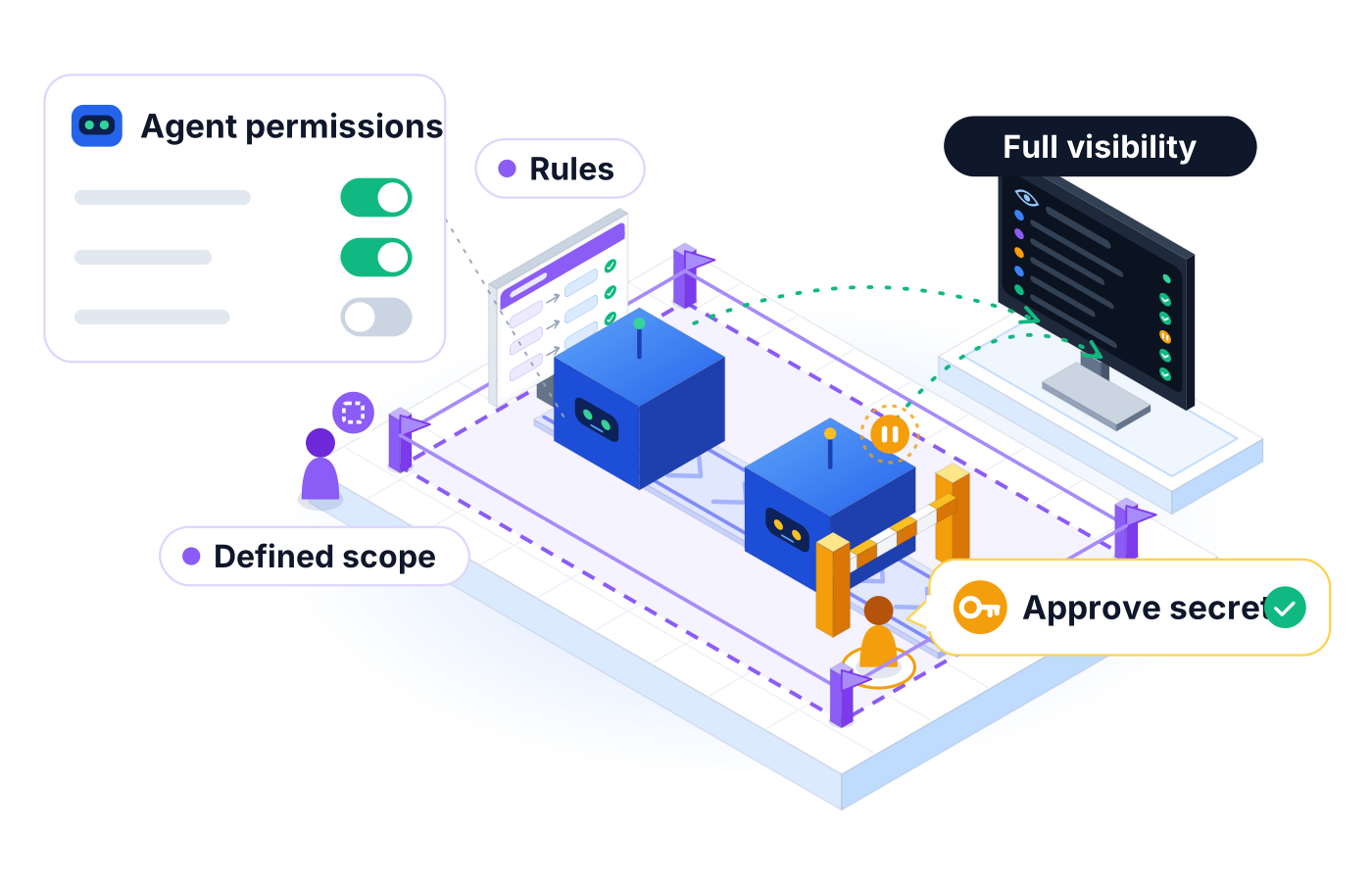
Robonito's AI agent pauses and asks a person before it saves a secret, such as a password, during a run.
Every run and every access is recorded, so you can trace what happened and who triggered it.
04Agentic AI governance
Robonito's agents speed up testing without running free. They act within boundaries your team sets, and they stop to ask before anything sensitive.
05Audit-ready
Security and compliance teams can review what ran, who ran it and what happened, without asking engineering to rebuild the story.
06Deployment
Choose the model that keeps control of data residency and infrastructure where your security team wants it.
Fully managed by Robonito, with the fastest setup and nothing to operate.
Best for: Teams that want to start quickly
A dedicated, isolated deployment for stronger separation and control.
Best for: Organizations that need isolation
Self-hosted inside your own infrastructure and network.
Best for: Regulated industries and strict data residency
A mix of cloud and on-premise environments, matched to your policies.
Best for: Mixed estates and phased migrations
07Security review
We share the SOC 2 Type II report under NDA, along with details of our security controls.
Your security and compliance teams walk through architecture, access and data handling with ours, and we work through your vendor questionnaire.
Run a proof of concept in the deployment model that meets your policies, on your own applications.
08FAQ
Yes. Robonito has a SOC 2 Type II report, which means an independent auditor tested how our security controls operated over a period of time, not just how they were designed. You can request the report under NDA.
A Type I report checks that controls are designed correctly at a single point in time. A Type II report tests whether those controls actually worked over an observation period, which gives your vendor review stronger evidence.
Request it from this page. Our team shares the report under NDA and can join a call with your security and compliance teams to answer follow-up questions.
Robonito combines role-based access control, secure authentication, encryption in transit, environment-level execution controls and full execution and access logs, all covered by SOC 2 Type II audited processes.
AI agents in Robonito run inside scopes and permissions people define, follow deterministic execution rules, and pause for human approval before sensitive actions such as saving a secret. Every step is logged and reviewable.
Yes. Robonito is available as a managed cloud service, a private cloud deployment, on-premise inside your own network, or a hybrid of cloud and on-premise environments.
Get the SOC 2 Type II report and a walkthrough of how Robonito handles access, data and AI agents in your environment.