
Letting AI agents own test creation, execution, and maintenance?
This decision impacts cost, velocity, and reliability far more than a tooling preference. This page explains the real difference ,without marketing fluff.

The Core Difference
They solve different problems in different operating models.This is not about “better automation.” It’s about who owns quality, and at what cost.
Robonito’s Approach
- AI agents understand real user journeys
- Tests are generated from application behavior
- No persistent test scripts to manage
- Tests adapt automatically as UI and flows change
- QA scales through execution and orchestration, not people
Robonito is an AI-native, agentic QA platform built to remove test code ownership altogether.
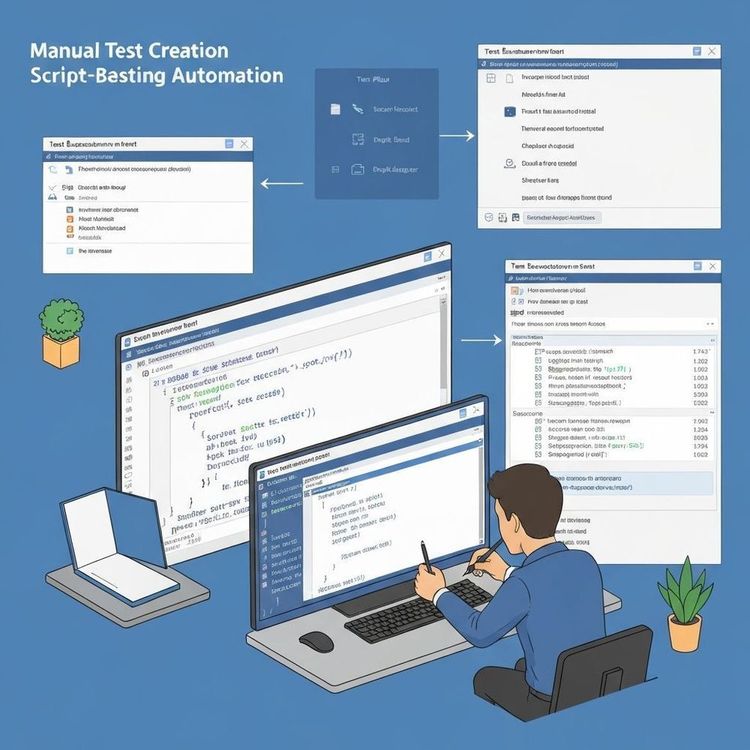
Playwright’s Approach
- Tests are written as JavaScript/TypeScript code
- Test creation and maintenance live with developers
- QA scales through engineering bandwidth
- Reliability depends on disciplined test upkeep
- Works best when UI change velocity is controlled
Playwright is a developer-centric browser automation framework built around code ownership.
This is an architectural difference, not a feature gap.
Feature Comparison at a Glance
| Capability | Robonito | Playwright |
|---|---|---|
| Test Creation | AI-generated from app behavior | Handwritten code |
| Script Ownership | None | Required |
| Maintenance Effort | Low (AI-driven healing) | High over time |
| Skill Dependency | QA, PMs, non-technical users | JavaScript / TypeScript |
| Handling UI Changes | Adaptive | Manual fixes |
| Speed to Coverage | Hours | Days or weeks |
| Scaling Model | Execution credits | More engineers |
| Modern App Support | Dynamic, AI-generated UIs | Sensitive to locator stability |
The Hidden Cost Teams Discover Too Late
Playwright is free. The engineers maintaining it are not. US teams routinely underestimate:
Time spent fixing
Time spent fixing broken tests
Context switching
Context switching between feature work and test upkeep
Test flakiness
Test flakiness blocking releases
QA velocity
QA velocity becoming tied to developer availability
Robonito removes this structural cost by removing test code ownership entirely. 30–50% of test effort goes into maintenance, • Test reliability degrades as UI velocity increases• QA becomes a bottleneck again, just with code instead of manual steps
AI-Assisted vs AI-Native Testing
Playwright can be used with AI tools, but AI is not the testing system.

Playwright relies on humans to:
- Write test logic
- Maintain selectors
- Decide coverage
- Debug failures
Playwright helps engineers automate browsers.

Robonito uses AI to:
- Generate tests
- Execute tests
- Heal tests
- Decide what to test next
Robonito lets AI own quality assurance.
Enterprise, Compliance & IP Considerations
From a US enterprise and legal perspective:
Robonito
No long-lived test code containing business logic
Reduced IP exposure during offboarding
Less dependency on individual engineers
SOC2-aligned architecture for regulated industries
Playwright
Test code becomes part of internal IP surface
Deep dependency on engineers who understand the tests
Higher risk during re-orgs, attrition, or team changes
This distinction matters for finance, healthcare, and scaled SaaS teams.
When to Choose Each Platform
When Playwright Is a Good Fit
Developers own QA fully
UI change velocity is low to moderate
You are comfortable paying long-term maintenance costs
QA scale is tied to engineering headcount
Playwright is a strong developer automation framework, just not an AI-native QA system.
When Robonito Is the Better Choice
You release weekly or continuously
Your UI is dynamic or AI-generated
You want QA scale without hiring more engineers
You want outcomes, not test code ownership
You want QA aligned with how modern software actually evolves
If you’re evaluating Robonito vs Playwright, don’t compare frameworks.
Run Robonito on your actual application flows See coverage, execution, and maintenance differences in days, not months
Questions & Answers
Frequently Asked Questions?
Get answers to common questions about Robonito
Robonito removes the need to manage Playwright-style test code while still using proven execution engines under the hood.
Yes. Robonito is built with SOC2-aligned security, role-based access, and enterprise execution controls.
Robonito works best when introduced via a focused PoC on real user journeys.
Still have questions?
Get in touch with our support team for personalized help with your specific testing challenges.