
Should AI Assist Testers or Own Testing End-to-End?
Explore whether AI should support human-written test cases or take full ownership of end-to-end software testing, comparing efficiency, accuracy, scalability, and the future role of QA engineers in AI-driven quality assurance.
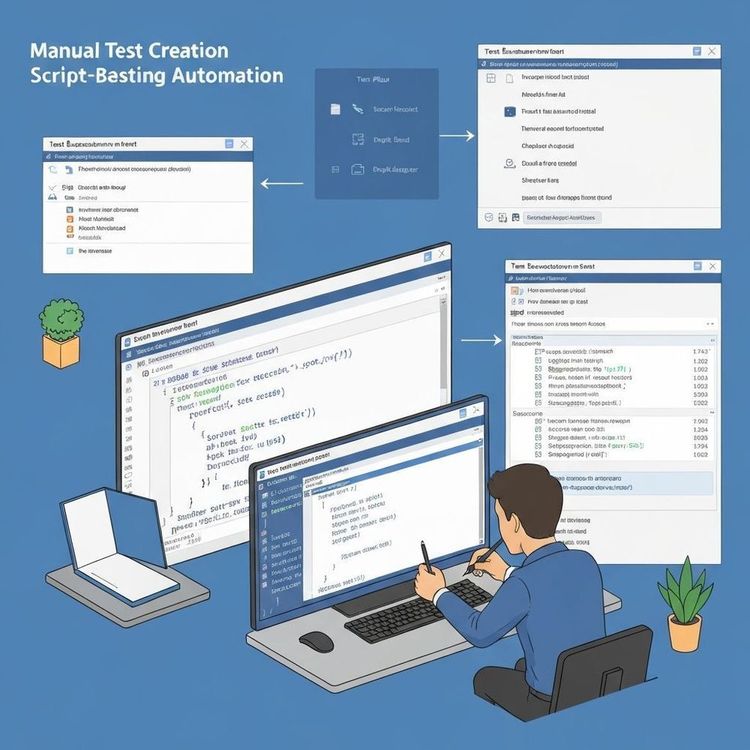
The Core Difference
They solve fundamentally different problems in different QA operating models.

Robonito's Approach
- AI agents generate tests from real user behavior
- No long-lived test scripts to manage
- Tests heal and adapt as the application changes
- Coverage evolves automatically after every change
- QA scales through execution orchestration, not people
Robonito is an AI-native, agentic QA platform designed to remove test scripting as a dependency altogether.

Testim’s Approach
- Script-based test logic remains central
- AI improves locator stability and reduces flakiness
- Test creation and maintenance owned by QA engineers
- Coverage decisions driven by humans
- QA scale grows with team size and effort
Testim is a script-centric automation platform enhanced with AI to make traditional testing more resilient.
This is not a feature comparison, it’s an architectural one.
Feature Comparison at a Glance
| Capability | Robonito | Testim |
|---|---|---|
| Test Creation | AI-generated from application behavior | Script-based with AI assistance |
| Script Ownership | None | Required |
| Maintenance Effort | Low (AI-driven healing) | Medium |
| Skill Dependency | QA, PMs, non-technical users | Automation engineers |
| Handling UI Changes | Adaptive | Script-dependent |
| Speed to Coverage | Hours | Days |
| Scaling Model | Outcome-based execution | Team-dependent |
| Modern App Support | Dynamic & AI-generated UIs | Limited by script stability |
The Hidden Cost Most Teams Discover Too Late
Testim reduces flakiness, but does not remove script ownership. Teams often underestimate:
Time spent
Time spent maintaining test logic
Knowledge silos
Knowledge silos within QA teams
Manual intervention
Manual intervention during failures
Scaling limits
Scaling limits tied to engineer availability
Robonito is designed to remove script ownership as a liability, not optimize it. Release velocity,QA team burnout,Long-term total cost of ownership
AI-Assisted vs AI-Native Testing

Testim uses AI to:
- Stabilize locators
- Reduce flaky behavior
- Improve existing scripted tests
- Provide smarter analytics
Testim helps humans test more efficiently.

Robonito uses AI to:
- Generate tests
- Execute tests
- Heal tests
- Decide what to test next
Robonito lets AI own the testing lifecycle.
Enterprise, Compliance & IP Considerations
From a US enterprise and legal perspective:
Robonito
No persistent test scripts embedding business logic
Reduced IP exposure during offboarding
Lower dependency on individual engineers
SOC2-aligned architecture for regulated industries
Testim
Script logic becomes part of internal IP surface
Higher dependency on people who understand test design
Script ownership risk during re-orgs or attrition
This matters for finance, healthcare, and scaled SaaS companies.
When to Choose Each Platform
When Testim Is a Good Fit
You already have a mature automation team
You’re comfortable maintaining scripts long-term
Your UI changes are manageable
You want to modernize a Selenium-style workflow
Testim is a strong AI-assisted automation tool.
When Robonito Is the Better Choice
You want to eliminate test scripting altogether
You release frequently or continuously
Your UI is dynamic or AI-generated
You want QA scale without hiring more engineers
You prefer outcome-based QA over script-based QA
If you’re evaluating Robonito vs Testim, don’t compare features.
Stop maintaining AI-assisted scripts, Let AI own testing on your real workflows
Questions & Answers
Frequently Asked Questions?
Get answers to common questions about Robonito
Robonito removes the need to manage Testim-style scripted tests while still using proven execution engines under the hood.
Yes. Robonito is built with SOC2-aligned security, role-based access, and enterprise execution controls.
Robonito works best when introduced via a focused PoC on real user journeys rather than a big-bang migration.
Still have questions?
Get in touch with our support team for personalized help with your specific testing challenges.