01The organization
Picture a regional bank serving a few hundred thousand retail and small-business customers. Online banking ships every two weeks, the mobile apps monthly, and both sit on account and payment APIs that the core banking vendor upgrades twice a year.
QA is six people. Before each app release, two of them spend days stepping through the same journeys on a shelf of test phones, and internal audit asks for proof that the critical journeys were tested.
None of this is unusual for a bank of this size. Customers expect the app to work as well as the big banks' apps, regulators expect controls around change, and the QA budget doesn't grow with either. The question is how to cover more journeys, more often, with the same six people.
02Business objectives
- Cover login, transfers, bill pay and card controls on web and mobile every release
- Take device regression off the testers' calendar
- Catch API breaks from core banking upgrades before customers do
- Hand internal audit a clear record of what was tested
03Testing challenges
Two channels, one journey
The same transfer exists on web, Android and iOS, and each was tested separately with different tools.
Upgrade blast radius
Core banking upgrades change API responses that the apps depend on, and nobody knows which journeys are affected until something breaks.
Brittle scripts
Earlier automation broke whenever a screen was redesigned, so the team went back to manual passes.
Evidence on request
Audit wants proof per release, which meant screenshots pasted into documents by hand.
04Before and after
How the testing work would change once the journeys run in Robonito.
- Device passes
- Today:Two testers spend days on a shelf of phones before each app release.
- With Robonito:Mobile journeys run unattended from the pipeline, and testers review failures.
- Web and app
- Today:Each channel tested separately, with different tools and different gaps.
- With Robonito:One journey definition runs on web, Android and iOS, with API checks inside it.
- Upgrades
- Today:API changes from core banking upgrades found by customers.
- With Robonito:API workflows rerun on every build, so a changed response fails a test first.
- Audit
- Today:Screenshots pasted into documents by hand for each release.
- With Robonito:Each run keeps video, traces and results that audit can review directly.
05How Robonito would test it
- 1
Write journeys in plain language
Testers describe each journey in plain English in AI Studio. The agent works through the app step by step and saves a test the team can read and edit.
- 2
Run the same journey everywhere
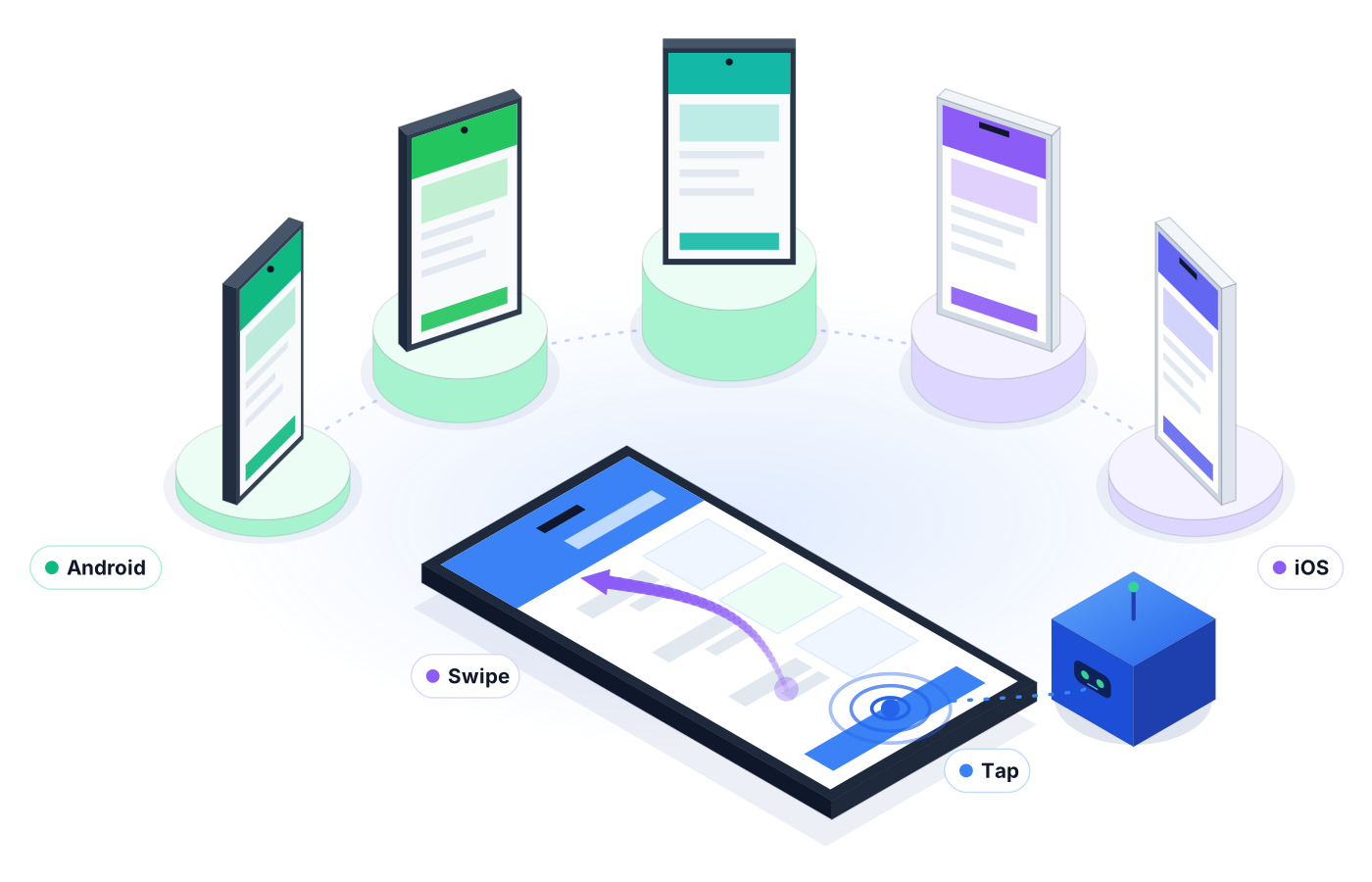
Journeys run on web and on Android and iOS apps, with API checks for balances and card status in the same test.
- 3
Import the API collections
The team imports its existing Postman collections and chains the calls into account and payment workflows.
- 4
Gate every build
Suites run from Azure DevOps on every build, in parallel in isolated workers, with failures raised in Jira and summaries posted to Slack.
- 5
Keep the evidence
Each run keeps video, network traces and an AI root cause for failures. Robonito runs in the bank's private cloud, with role-based access and audit logs.
06Test scenarios, in plain language
Tests you'd write in Robonito on day one. Each one is typed as written; the agent works through the app and saves the steps.
- LoginLog in as a customer with a joint account and confirm both owners appear on the account summary.
- TransfersMove $250 from checking to savings and confirm both balances update on web and in the app.
- Bill paySchedule a bill payment for next Friday, cancel it, and confirm it no longer appears in upcoming payments.
- Card controlsFreeze the debit card in the app and confirm the card status API returns frozen.
- Fraud rulesSend $15,000 to a newly added payee and confirm the extra verification step appears before the payment is submitted.
- StatementsOpen statements and confirm the last 12 months are listed, newest first.
- APICall the accounts API for a closed account and confirm it returns the closed status, not an error.
07What the pilot measures
No made-up numbers: a pilot measures these against your current baseline, on your own app.
Regression time per release
Hours to run the covered journeys on all channels, against today's manual effort.
Device passes retired
How many manual device passes the covered journeys replace.
Escaped defects
Defects found in production in covered journeys, before and after.
Audit evidence
Whether each release has a run record audit accepts without extra work.
08Rolling it out: the first month
A realistic plan for a team starting from zero, with the baseline comparison built in.
- Week 1
Pick the top journeys
QA and product agree on the ten journeys that drive the most calls and complaints, starting with login, transfers and card controls.
- Week 2
Write and run them
Testers describe the journeys in AI Studio, import the Postman collections, and run everything on web and mobile.
- Week 3
Wire up the pipeline
Suites run from Azure DevOps on each build, with failures in Jira and summaries in Slack.
- Week 4
Compare with the baseline
The team compares regression hours, device passes and defects with the last manual release and decides what to cover next.
09Frequently asked questions
Can Robonito test mobile banking apps?
Yes. Mobile app testing for Android and iOS is included on the Pro and Custom plans, alongside web and API testing, so a single journey can cover the app, the website and the APIs behind them.
Can a bank run Robonito in its own environment?
Yes. Robonito can be deployed in the cloud, in a private cloud, on-premise or as a hybrid. Role-based access and audit logs of test and agent activity are included, and the SOC 2 Type II report is available under NDA.
Does Robonito work with our existing API tests?
You can import existing Postman collections and chain the calls into workflows, or generate API tests from Swagger or OpenAPI definitions in AI Studio.
What evidence does Robonito keep for each test run?
Every run keeps a video, network traces and an AI root cause for any failure, plus pass rates, trends and risk analysis across runs. That record is what most audit and change-management reviews ask for.